
What Is Scarring (Cicatricial) Alopecia?
Scarring alopecia, also known as cicatricial alopecia, refers to a group of hair loss disorders where the hair follicles are permanently destroyed and replaced by scar tissue.
This makes it different from non-scarring alopecia, where the follicles remain intact and regrowth is possible.
Scarring Alopecia vs Non-Scarring Alopecia
Many people search for:
- “scarring vs non scarring alopecia”
- “scarring alopecia vs non scarring”
- “scarring and non scarring alopecia”
- “scarring and non scarring alopecia causes”
Here is the simplest explanation:
| Feature | Scarring Alopecia | Non-Scarring Alopecia |
| Follicle Damage | Permanent | Temporary |
| Regrowth Possible? | Usually NOT | Mostly YES |
| Causes | Autoimmune, inflammatory, trauma | Stress, hormones, deficiencies |
| Common Types | Lichen planopilaris, CCCA, frontal fibrosing alopecia | Alopecia areata, telogen effluvium |
| Pain/Itching | Frequently | Rarely |
Types of Scarring Alopecia (Highly Searched)
People also search for “types of scarring alopecia”.
Common types include:
- Lichen Planopilaris (LPP)
- Frontal Fibrosing Alopecia (FFA)
- Central Centrifugal Cicatricial Alopecia (CCCA) — common in women
- Discoid Lupus Erythematosus
- Folliculitis Decalvans
- Traction Alopecia (when chronic, becomes scarring)
Read – Type of Hair Patch
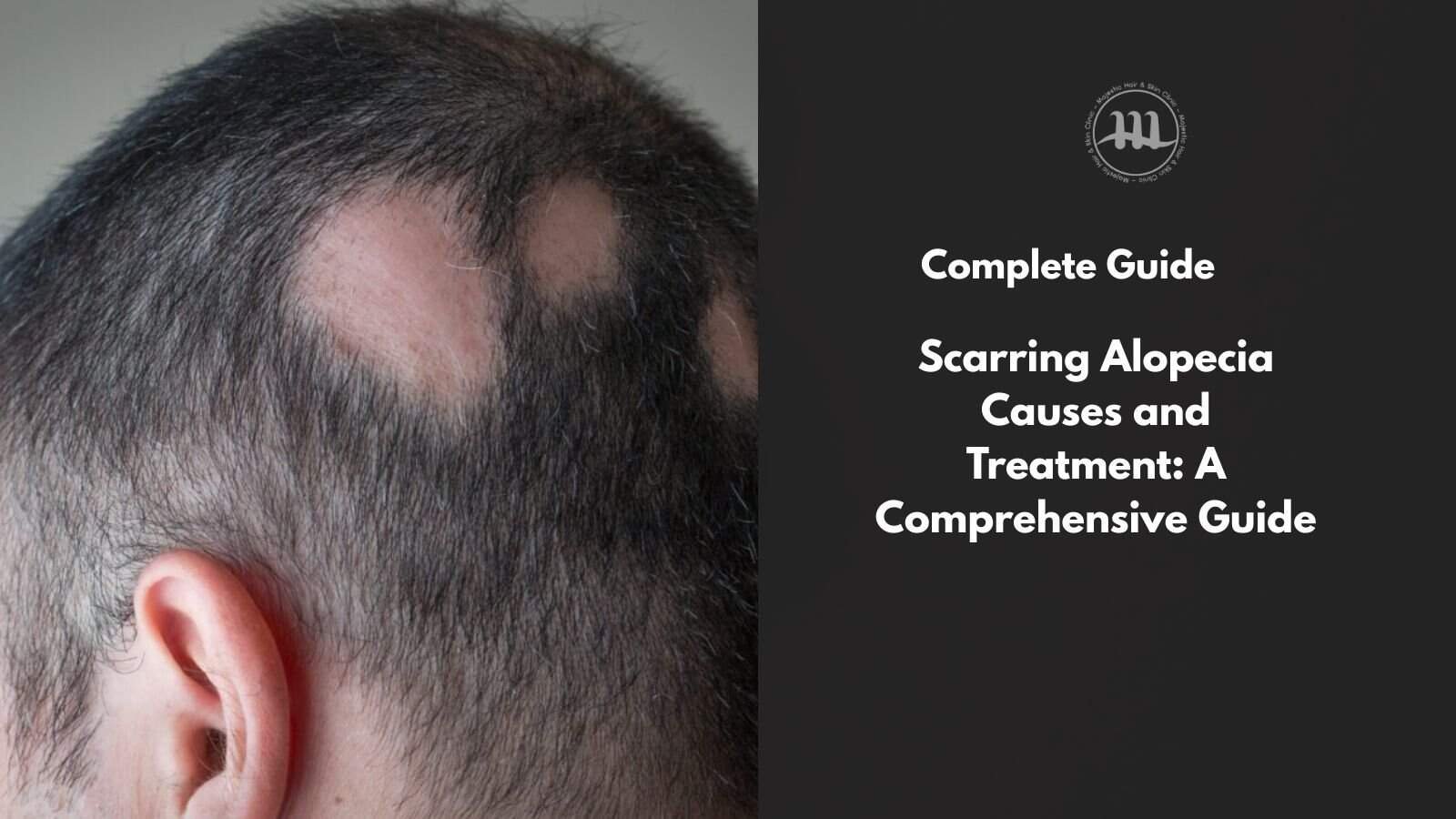
What Does Scarring Alopecia Look Like?
Search volume for “what does scarring alopecia look like” is high.
Visual Signs
- Shiny, smooth patches on scalp
- No visible pores (follicles destroyed)
- Redness or dark discoloration
- Scaling or flaking
- Pus-filled bumps (in inflammatory types)
- Burning or pain on scalp
If you’re noticing thin patches, smooth bald spots, or scalp redness, consult a dermatologist immediately.
Scarring Alopecia Causes
People searching “scarring alopecia causes” often want fast answers.
Common causes include:
1. Autoimmune Disorders
Your immune system attacks hair follicles.
Seen in:
- Lichen planopilaris
- Frontal fibrosing alopecia
2. Inflammatory Conditions
Chronic inflammation destroys follicles.
3. Chronic Traction (Tight Hairstyles)
Long-term tight ponytails, braids → traction alopecia
Becomes scarring if untreated.
4. Bacterial or Fungal Infections
Folliculitis leading to permanent damage.
5. Burns & Physical Trauma
Injury causes scar formation → irreversible hair loss.
6. Genetic Predisposition
Family history increases risk (common in FFA & CCCA).
Scarring Alopecia Symptoms
People search “scarring alopecia symptoms” because early signs are confusing.
Early Symptoms
- Itching
- Burning sensation
- Redness on scalp
- Tenderness
- Hair thinning in small patches
Advanced Symptoms
- Smooth bald patches
- Loss of follicular openings
- Permanent scalp scarring
Can Scarring Alopecia Be Reversed?
Many users ask: “can scarring alopecia be reversed?”
If detected early → hair loss can be slowed, inflammation can be stopped.
If scarring is complete → regrowth is NOT possible because follicles are gone.
This is why early diagnosis is crucial.
Scarring Alopecia Treatment
1. Anti-inflammatory Medications
- Corticosteroid injections
- Oral steroids
- Topical steroids
- Hydroxychloroquine
- Immunosuppressants
These reduce inflammation and stop further follicle destruction.
2. Antibiotics
For folliculitis-associated scarring alopecia.
3. Minoxidil
Helps strengthen remaining follicles (but cannot grow hair on scarred skin).
4. PRP / GFC Therapy
Helps in borderline/early cases by improving follicle survival.
5. Hair Transplant
Applicable ONLY if the disease is completely inactive for 1–2 years.
Scar tissue has lower blood supply, so success varies.
This fits queries like:
- “scarring alopecia regrowth”
- “new treatment for scarring alopecia”
6. Laser Therapy
Helps reduce inflammation and improve scalp healing.
7. Natural Remedies
(This covers “how to treat scarring alopecia naturally”.)
While natural remedies cannot reverse scarring, they help:
- Reduce inflammation
- Support scalp health
Examples:
- Aloe vera
- Rosemary oil
- Turmeric (anti-inflammatory)
- Gentle scalp massage
Note: These are only supportive treatments.
Non-Scarring Alopecia Causes & Treatment
Because terms like “non scarring alopecia”, “non scarring alopecia causes”, and “non scarring alopecia treatment” have high volume, here’s a short explanation.
✔️ Causes:
- Stress
- Nutrient deficiency
- Hormonal imbalance (thyroid, PCOS)
- Sudden weight loss
- Acute illness
- Pregnancy
- Genetics
✔️ Treatment:
- Minoxidil
- Supplements
- Diet changes
- PRP therapy
- Stress management
Regrowth is possible, unlike scarring alopecia.
Scarring Alopecia Success Stories
Success occurs when:
- Condition is diagnosed early
- Inflammation is controlled
- Hair loss progression stops
- Cosmetic treatments improve appearance
When to See a Doctor?
Visit a dermatologist if you notice:
- Burning scalp
- Persistent itching
- Sudden patchy loss
- Smooth shiny bald spots
- Pus-filled bumps
- Family history of LPP or FFA
Early treatment prevents permanent hair loss.
Conclusion
Scarring alopecia is permanent if ignored — but treatable if detected early.
With the right diagnosis, anti-inflammatory medications, lifestyle management, and supportive therapies, you can stop its progression and protect remaining hair.
If you notice unusual symptoms, consult a dermatologist at the earliest.
FAQs With Answers
1. What is scarring (cicatricial) alopecia?
Scarring alopecia is a group of hair loss conditions where inflammation permanently destroys hair follicles and replaces them with scar tissue. Once scarring occurs, the hair cannot regrow.
2. How is scarring alopecia different from non-scarring alopecia?
In non-scarring alopecia (like alopecia areata or telogen effluvium), the hair follicle remains intact and can regrow. In scarring alopecia, the follicle is permanently damaged, causing irreversible hair loss.
3. What are the most common causes of scarring alopecia?
It can be caused by:
• Autoimmune inflammation (LPP, FFA)
• Fungal or bacterial infections
• Severe burns or injuries
• Genetic conditions
• Constant traction from hairstyles (traction alopecia)
• Radiation, chemicals, or harsh treatments
4. What are the early signs and symptoms of scarring alopecia?
• Visible patches of hair loss
• Redness or darkening around follicles
• Itching, burning, or tenderness
• Pus or scaling
• Smooth, shiny skin where hair used to be
5. What does scarring alopecia look like on the scalp?
The scalp often appears smooth, shiny, and without visible hair follicles. You may also see redness, scaling, or small bumps around the affected area.
6. Which types of scarring alopecia should I know about?
Major types include:
• Lichen Planopilaris (LPP)
• Frontal Fibrosing Alopecia (FFA)
• Central Centrifugal Cicatricial Alopecia (CCCA)
• Discoid Lupus
• Traction Alopecia
• Folliculitis Decalvans
7. Can scarring alopecia be reversed or cured?
The hair that is already scarred cannot grow back. However, early diagnosis and treatment can stop or slow further hair loss.
8. How is scarring alopecia diagnosed?
A dermatologist performs:
• Scalp examination
• Dermatoscopy
• Blood tests
• Scalp biopsy (gold standard)
These help determine the exact type and cause.
9. What medical tests will my dermatologist order?
• CBC, ESR, CRP
• Thyroid profile
• Autoimmune tests (ANA)
• Hormone levels if needed
• Scalp culture for infections
10. What are the best treatment options for scarring alopecia?
Treatment depends on the cause but includes:
• Anti-inflammatory medicines
• Oral corticosteroids
• Antibiotics/antimicrobials
• Immunosuppressants
• Topical steroids
• PRP (in some cases)
• Lifestyle & scalp care adjustments
11. How effective are anti-inflammatory drugs and corticosteroids?
These drugs reduce the inflammation attacking the follicles. They don’t regrow lost hair but significantly help stop disease progression.
12. Can antibiotics or antifungals treat scarring alopecia?
Yes—if the cause is bacterial or fungal. Example: folliculitis decalvans responds well to long-term antibiotics.
13. Is PRP useful for scarring alopecia?
PRP can help reduce inflammation and improve scalp health, but results vary. It is usually helpful in early or mild cases, not advanced scarring.
14. When is a hair transplant an option?
A hair transplant is considered only when:
• The disease has been inactive for 12–24 months
• The scalp is stable with no redness or itching
• Follicles are no longer actively inflamed
15. How long should the disease be inactive before hair restoration?
Most specialists recommend at least 1–2 years of complete inactivity before a transplant to prevent failure.
16. What home remedies help with scarring alopecia?
While home remedies cannot reverse scarring, you can:
• Use gentle, sulfate-free shampoos
• Avoid hot tools and harsh chemicals
• Reduce tight hairstyles
• Keep scalp clean and moisturized
• Maintain an anti-inflammatory diet
17. Can scarring alopecia cause itching or burning?
Yes. Itching, burning, pain, and tenderness are common because inflammation damages the follicles.
18. Are lifestyle changes helpful?
Yes. Reducing friction, avoiding heat/chemicals, managing stress, and following a healthy diet can slow progression.
19. Is scarring alopecia hereditary or contagious?
It is not contagious.
Some types, such as CCCA, may have a genetic component.
20. How common is scarring alopecia and who is at risk?
It is less common than non-scarring hair loss. Women, people with autoimmune conditions, or those using tight hairstyles are at higher risk.
21. What is the prognosis — will it spread?
With timely treatment, spreading can be controlled. Without treatment, inflammation may continue to destroy follicles.
22. How do I know if my hair loss is scarring or temporary?
Signs of scarring include:
• Smooth, shiny scalp
• No visible follicle openings
• Persistent redness or itching
A dermatologist’s biopsy confirms it.
23. What cosmetic options exist to cover permanent patches?
• Scalp micropigmentation
• Hair fibers
• Wigs or hair toppers
• Hair transplant (if stable)
24. Are there new treatments for scarring alopecia?
Research includes:
• JAK inhibitors
• Low-level laser therapy (LLLT)
• Stem-cell based therapies
These are not yet standard but show promise.
25. What questions should I ask my dermatologist?
• What type of scarring alopecia do I have?
• What triggered it?
• What treatment will stop progression?
• Do I need a scalp biopsy?
• When can I consider hair restoration?
26. Can scarring alopecia affect eyebrows or eyelashes?
Yes conditions like FFA often affect eyebrows, and severe inflammatory types can affect body hair.
27. How do I find a specialist?
Look for a board-certified dermatologist or trichologist who has experience specifically in cicatricial alopecia and performs scalp biopsies regularly.
28. Are there support groups or communities?
Yes, online communities like Facebook groups, Alopecia support forums, and dermatology clinic forums often help with emotional support.
29. What ICD-10 code is used?
The common code for scarring alopecia is L66 (Cicatricial alopecia).
30. How should I care for my scalp during treatment?
• Follow medication guidelines strictly
• Avoid hair dyes or heat tools
• Keep the scalp moisturized
• Use mild shampoos
• Do not scratch or pick flakes
Disclaimer:
This blog is written by a healthcare content writer with 6+ years of experience and medically reviewed by Dr. Tapan Maitrey, who has treated 10,000+ patients. This article is for educational purposes only.
Here are SEO-optimized, concise, medically accurate answers for each FAQ for your blog “Scarring Alopecia Causes and Treatment: A Comprehensive Guide.”
These are written in simple language but maintain dermatology accuracy.