
Hair loss is often blamed on genetics or hormones, but nutritional deficiencies especially protein deficiency are one of the most overlooked causes of excessive hair fall. Since hair is primarily made of protein, inadequate intake can directly affect hair growth, strength, and thickness.
Why Protein Is Essential for Hair Growth
Hair is composed mainly of keratin, a structural protein. For healthy hair growth, your body needs a continuous supply of dietary protein to:
- Build new hair strands
- Strengthen hair shafts
- Support hair follicle function
- Maintain the hair growth cycle (anagen phase)
When protein intake is insufficient, the body prioritizes vital organs over hair, leading to hair shedding.
Can Protein Deficiency Cause Hair Loss?
Yes. Protein deficiency can directly cause hair loss, especially diffuse thinning and excessive shedding. When the body lacks protein, hair follicles prematurely enter the resting phase, resulting in telogen effluvium.
Hair loss due to protein deficiency is usually reversible if corrected early.
How Protein Deficiency Leads to Hair Loss
1. Disruption of the Hair Growth Cycle
Low protein intake shortens the growth phase (anagen) and pushes more hair follicles into the shedding phase.
2. Reduced Keratin Production
Without enough protein, the body cannot produce adequate keratin, resulting in:
- Weak hair strands
- Increased breakage
- Loss of volume
3. Poor Nutrient Absorption & Muscle Loss
Protein deficiency often coexists with deficiencies of iron, zinc, and vitamins—further worsening hair fall.
Common Symptoms of Protein Deficiency
Along with hair loss, signs of protein deficiency may include:
- Excessive hair shedding
- Thin, brittle, or dry hair
- Slow hair growth
- Fatigue and weakness
- Muscle loss
- Swelling (edema) in severe cases
Hair loss may be one of the earliest visible symptoms.
Who Is at Risk of Protein Deficiency?
Protein deficiency is more common in:
- People on crash diets or extreme calorie restriction
- Vegetarians or vegans without balanced planning
- Post-bariatric surgery patients
- Elderly individuals
- People with digestive disorders
- Chronic illness patients
Diagnosing Protein Deficiency-Related Hair Loss
Doctors may recommend:
- Dietary assessment
- Blood tests (serum albumin, total protein)
- Evaluation of other nutritional deficiencies
- Hair and scalp examination
Proper diagnosis helps avoid unnecessary cosmetic procedures.
Treatment: How to Reverse Hair Loss Caused by Protein Deficiency
1. Increase Dietary Protein Intake
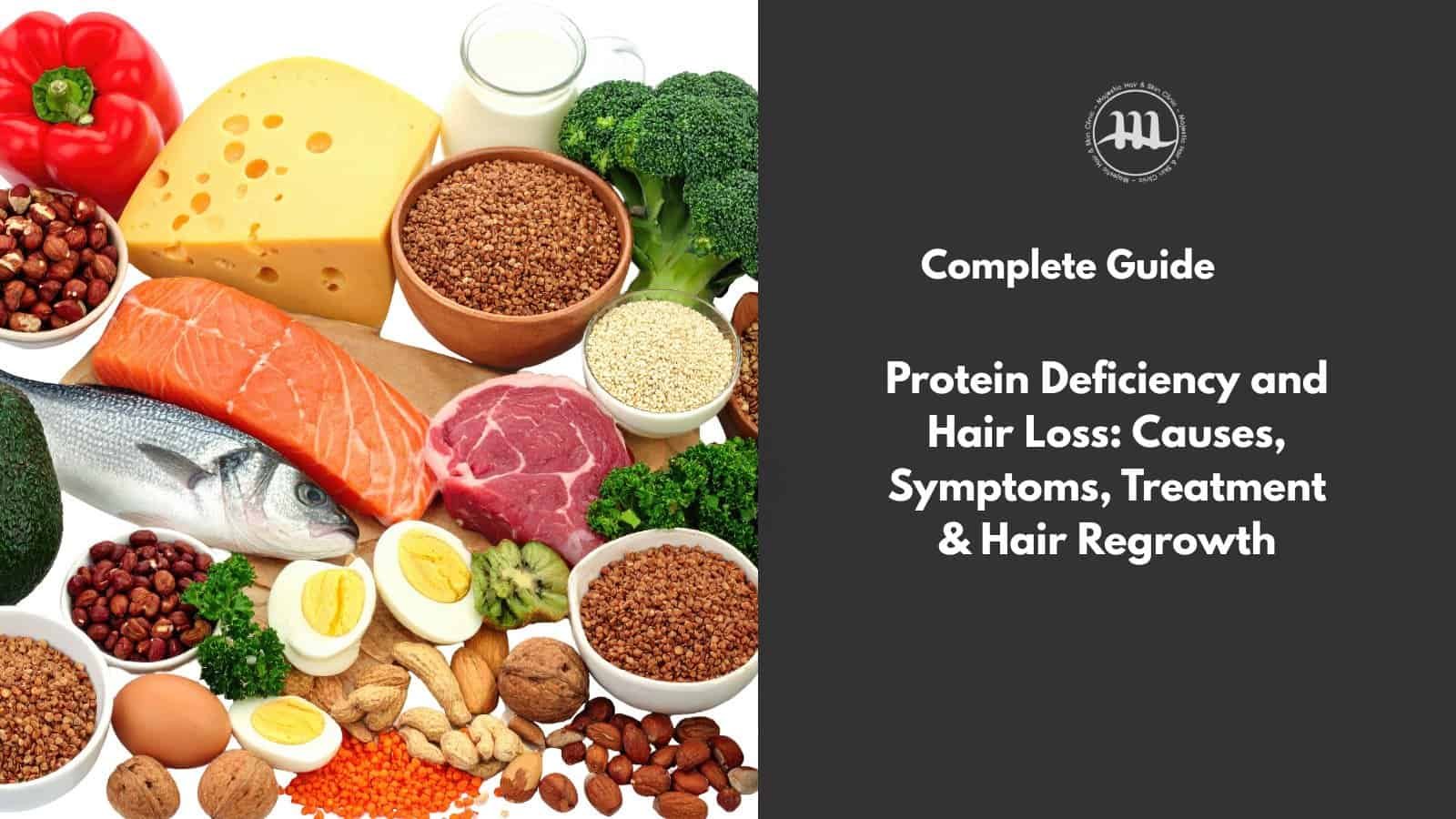
Protein-rich foods include:
- Eggs
- Dairy products
- Lean meat and fish
- Pulses, lentils, and beans
- Soy products
- Nuts and seeds
A balanced diet is always preferred over supplements.
2. Protein Supplements (If Required)
In some cases, doctors may recommend protein powders or amino acid supplements under supervision.
3. Treat Associated Deficiencies
Correcting iron, zinc, vitamin D, and B-vitamin deficiencies is equally important for hair recovery.
How Long Does Hair Take to Grow Back?
Once protein levels normalize:
- Hair fall reduces in 6–8 weeks
- New hair growth begins in 3–4 months
- Visible improvement occurs by 6 months
Consistency is key for recovery.
When Hair Loss Persists: Additional Options
If hair thinning continues despite correction:
- Medical treatments may be considered
- PRP therapy in selected cases
- Hair patch for cosmetic density
- Hair transplant only after stabilization
Treating the nutritional cause is essential before any cosmetic solution.
Protein Deficiency vs Genetic Hair Loss
| Feature | Protein Deficiency | Genetic Hair Loss |
|---|---|---|
| Onset | Sudden | Gradual |
| Pattern | Diffuse thinning | Patterned |
| Reversible | Yes | Progressive |
| Treatment | Nutrition | Medical/Surgical |
Frequently Asked Questions
Can low protein cause hair thinning?
Yes. Low protein intake can lead to diffuse thinning and excessive hair shedding.
Is protein hair loss reversible?
Yes, if addressed early with proper nutrition.
How much protein is needed for healthy hair?
Generally 0.8–1.2 g/kg/day, depending on age, activity, and health status.
Can protein supplements stop hair fall?
They help only if deficiency exists and should be used under guidance.
Can hair transplant fix protein deficiency hair loss?
No. The deficiency must be corrected first.
Final Thoughts
The link between protein deficiency and hair loss highlights how essential proper nutrition is for healthy hair. Hair loss is often the body’s way of signaling an internal imbalance.
Addressing the root cause through diet and medical care can restore hair health naturally and effectively.