
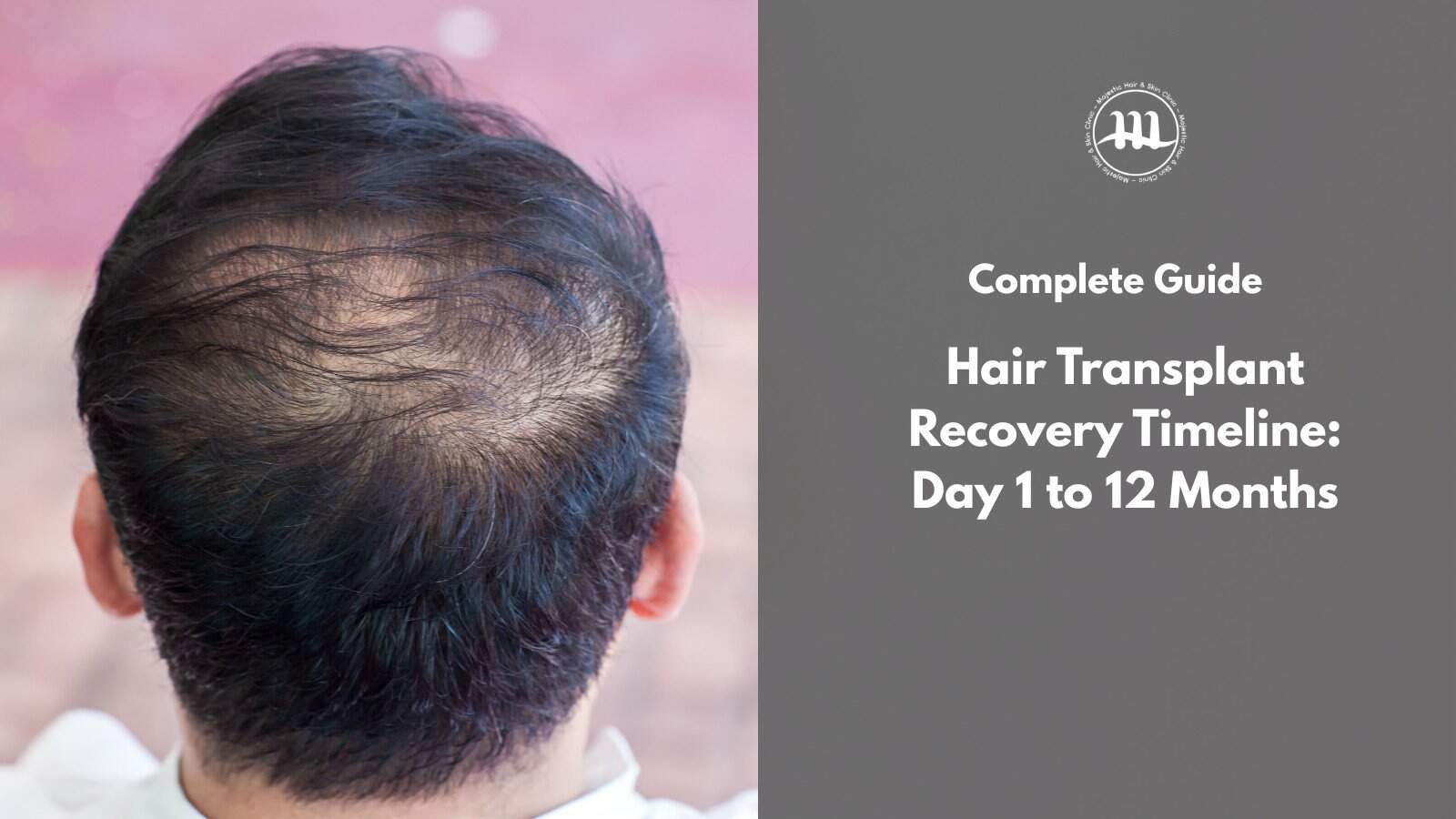

Undergoing a hair transplant is a life-changing decision—but understanding the hair transplant recovery timeline is just as important as the procedure itself. From the first 24 hours to full hair growth at 12 months, each stage plays a critical role in achieving natural, long-lasting results.
This dermatologist-recommended guide explains what happens after a hair transplant—day by day and month by month.
Day 1: Immediately After Hair Transplant Surgery
The first 24 hours are crucial for graft survival.
What you’ll experience:
- Mild swelling on forehead or scalp
- Redness in donor and recipient areas
- Tiny scabs around transplanted grafts
- Dermatologist Advice:
- Keep your head elevated
- Avoid touching or scratching the scalp
- Take prescribed medications strictly
Day 2–3: Early Healing Phase
This phase focuses on stabilizing the transplanted follicles.
Common changes:
- Slight tightness or itching
- Scab formation begins
- Swelling gradually reduces
- Gentle saline spray is recommended
- No direct sun exposure
Day 4–7: Scab Formation & Shedding Begins
By the end of the first week, scabs start drying and falling off naturally.
What’s normal:
- Scabs begin to shed
- Redness reduces
- Donor area healing improves
Do NOT manually remove scabs—it may damage grafts.
Day 8–14: Shock Loss Phase (Temporary)
Many patients panic during this stage—but it’s completely normal.
What happens:
- Transplanted hair begins to shed
- Follicles remain safely implanted under the skin
- Scalp looks similar to pre-transplant stage
1 Month After Hair Transplant
At one month, visible hair may appear minimal.
Expected changes:
- Shedding phase continues
- Scalp healing is nearly complete
- Itching significantly reduces
Hair roots are entering a resting phase
Patience is key
2–3 Months: Dormant Phase
This is the quiet phase of recovery.
What to expect:
- Little to no visible hair growth
- Follicles strengthen beneath the scalp
- Scalp feels normal
4–5 Months: New Hair Growth Begins
The exciting phase starts here.
Visible improvements:
- Fine, thin hair begins emerging
- Hair texture may feel soft or uneven
- Coverage slowly improves
6 Months After Hair Transplant: Noticeable Results
By month 6, most patients see 40–50% hair growth.
Key improvements:
- Increased density
- Hair starts thickening
- Hairline becomes visible
8–9 Months: Hair Thickening Phase
Hair shafts grow stronger and darker.
What changes:
- Improved volume
- Better styling options
- Natural blending with existing hair
10–12 Months: Final Hair Transplant Results
This is the completion phase of the hair transplant recovery timeline.
Final outcomes:
- 90–100% transplanted hair growth
- Full density achieved
- Natural hair texture and direction
Results are permanent and long-lasting.
Hair Transplant Recovery Tips (Dermatologist Recommended)
- Avoid smoking and alcohol for at least 2 weeks
- Follow washing instructions carefully
- Avoid heavy workouts for 3–4 weeks
- Attend follow-up appointments
- Maintain a healthy diet
Common FAQs on Hair Transplant Recovery Timeline
How long does it take to fully recover from a hair transplant?
Complete recovery and final results take 10–12 months.
Is hair shedding after transplant normal?
Yes, shock loss within 2–8 weeks is completely normal.
When can I resume work after hair transplant?
Most patients return to work within 3–5 days, depending on comfort.
When does new hair start growing after transplant?
New growth usually begins between 3–4 months.
Final Thoughts
Understanding the hair transplant recovery timeline from day 1 to 12 months helps set realistic expectations and reduces anxiety. With proper aftercare and dermatologist supervision, results are natural, permanent, and confidence-boosting.
If you’re considering a hair transplant or have recently undergone one, expert guidance makes all the difference.