
Seeing hair fall out in clumps in the shower, on your pillow, or while brushing can be scary. It feels sudden, unexpected, and often makes people fear permanent baldness.
The truth? Most cases of clump hair shedding are temporary and reversible especially if treated early.
This guide covers EVERYTHING users search for, including:
- Why is my hair falling out?
- Why is my hair falling out in clumps?
- Is it telogen effluvium?
- Causes in men, women, teenagers
- Hair falling out in shower
- Hair falling out with white bulb
- How to stop hair falling out
- When to see a doctor
- Best treatments that work fast
Let’s start with the basics.
What Does “Hair Falling Out in Clumps” Mean?
Normal hair shedding: 50–100 strands/day
Clump shedding: 150–400+ strands/day
If you notice:
✔ thick strands in your hand
✔ hair clogging the shower drain
✔ bald patches developing
✔ hair coming out with a white bulb
it indicates acute hair shedding, commonly caused by stress, hormonal changes, illness, or nutritional deficiency.
Why Is My Hair Falling Out in Clumps? (Top 12 Causes)
1 Telogen Effluvium (Massive Shedding Trigger) – 12,100 searches/month
Occurs due to a shock to your body:
- Fever/viral illness
- Stress/anxiety
- Surgery
- Crash dieting
- Vitamin deficiency
- Postpartum changes
Shedding starts 6–12 weeks after the trigger and can last 3–6 months.
2. Nutritional Deficiencies
Most searched deficiencies:
- Vitamin D deficiency
- Iron deficiency (Ferritin < 50)
- Vitamin B12
- Zinc deficiency
Low ferritin is one of the biggest causes of clump shedding in women.
3. Hormonal Imbalance (Especially in Women)
- PCOS
- Thyroid: Hypothyroidism & Hyperthyroidism
- Postpartum
- Perimenopause
- Stress cortisol spikes
These lead to diffuse thinning + clump shedding.
4. Androgenetic Alopecia (Male & Female Pattern Baldness)
This is a progressive form of hair loss.
Symptoms:
- Thinning at crown
- Widening part (women)
- Receding hairline (men)
- Hair falling out with white bulb
5. Harsh Chemical Damage
Including:
- Hair bleaching
- Hair coloring
- Keratin treatments
- Frequent heat styling
6. Sudden Stress Events (Emotional Shock)
Breakups, anxiety, panic attacks, grief, and mental stress often trigger telogen effluvium.
7. Illness or High Fever (Post-Viral Shedding)
Most common after:
- Dengue
- Typhoid
- COVID
- Viral fever
- Surgery
8. Medications (Drug-Induced Shedding)
- Acne medicines (isotretinoin)
- Blood pressure medications
- Antidepressants
- Thyroid medicines
- Birth control pills
9. Scalp Conditions
- Dandruff
- Seborrheic dermatitis
- Psoriasis
- Fungal infection
These weaken roots → cause clump shedding.
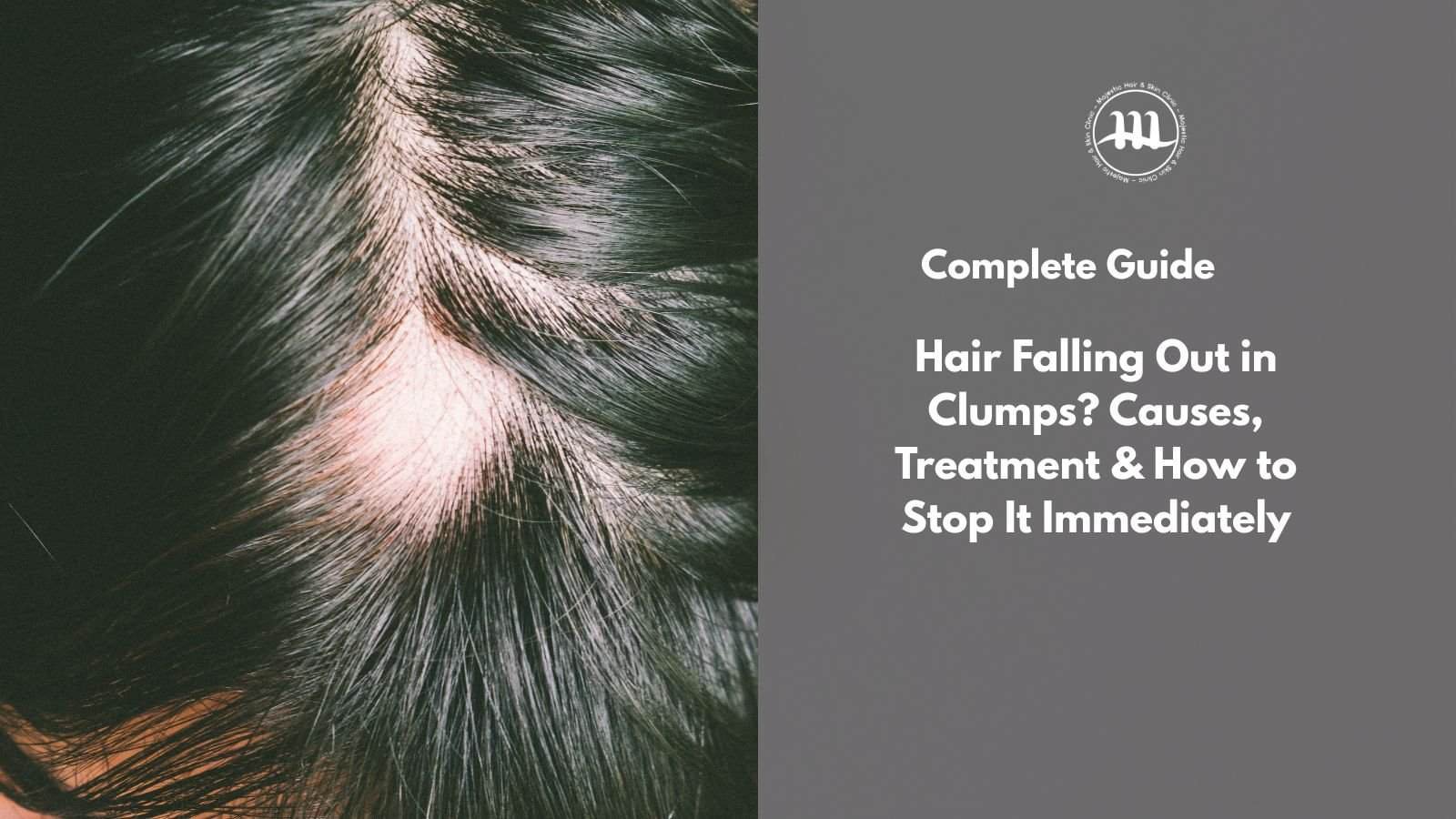
10. Autoimmune Hair Loss (Alopecia Areata)
Sudden round patches of baldness.
Hair falls out in coin-shaped clumps.
11. Age-Related Hair Loss
From age 25–30, hormonal hair thinning begins for many men/women.
12. Genetics
If parents have hair loss → you may shed more.
Symptoms of Hair Falling Out in Clumps
✔ Hair coming out in the shower
✔ Hair clumping together
✔ Visible scalp after combing
✔ Hair with white bulbs at the root
✔ Sudden increase in shedding
✔ Thinner ponytail
✔ Bald patches
Read – Type of Hair Patch
Hair Falling Out in Shower — Is It Serious?
If you see more than usual hair fall while shampooing, it may indicate:
- Telogen effluvium
- Stress
- Thyroid imbalance
- Vitamin deficiency
Shower shedding is usually temporary and reversible.
Hair Falling Out With White Bulb — What Does It Mean?
This white bulb = club hair
Meaning: your hair is in the telogen phase and has naturally detached.
It’s NOT root damage.
It’s temporary shedding.
How to Stop Hair Falling Out in Clumps (Scientifically Proven)
1. Start a 90-Day Anti-Shedding Protocol
✔ Vitamin D3
✔ Ferritin booster (iron)
✔ Omega-3
✔ Biotin (optional but helpful)
✔ Zinc
✔ Protein (1g/kg body weight)
2. Use a Dermatologist-Approved Regimen
✔ 1% Ketoconazole shampoo (3x/week)
✔ Mild cleansing shampoo on other days
✔ Anti-dandruff treatment if needed
3. Start PRP or GFC Hair Treatment
Speeds up recovery from:
Telogen Effluvium
Pattern hair loss
Stress hair fall
4 Use Minoxidil (Only if Doctor Recommends)
2% / 5% Foam or Solution
Works for:
- Men with pattern baldness
- Women with thinning
- People recovering from TE
5 Reduce Stress & Improve Sleep
High cortisol = massive hair shedding.
Sleep 7–8 hours.
6 Avoid These Immediately
Bleaching
Heat styling
Tight hairstyles
Crash dieting
Random supplements
When to See a Dermatologist?
Consult a hair specialist when:
- shedding continues > 3 months
- bald patches appear
- hair density visibly reduces
- scalp burning/itching
- sudden heavy clump shedding
- postpartum hair fall not improving
- after illness/fever
Is Hair Transplant Needed?
A transplant is NOT needed for telogen effluvium.
It is needed when:
Hair thinning becomes permanent
Pattern baldness in men
Receding hairline
Crown thinning
For temporary shedding → treatments + diet fix it.
FAQS
1. Why is my hair falling out in clumps?
Hair falling out in clumps usually happens due to Telogen Effluvium, a condition where sudden stress, illness, hormonal changes, or nutritional deficiencies push large numbers of hairs into the shedding phase. It can also be caused by thyroid issues, iron deficiency, postpartum changes, crash diets, infections, or excessive chemical treatments.
2. Is it normal for hair to fall out in clumps?
No, shedding in clumps is not normal. Normal hair fall is 50–100 strands daily, while clumps indicate an underlying trigger such as stress, nutritional deficiency, illness, or hair damage.
3. Why is my hair falling out in clumps in the shower?
Hair falling out in clumps in the shower usually indicates acute hair shedding (Telogen Effluvium). A warm shower loosens weak roots, making shedding more visible. Common causes include stress, fever, illness, childbirth, dieting, thyroid imbalance, or harsh shampoos.
4. How do I stop my hair from falling out in clumps?
To stop clump hair fall:
- Increase protein, iron, vitamin D, zinc, and biotin intake.
- Reduce stress and sleep at least 7–8 hours.
- Avoid heat styling, bleaching, and tight hairstyles.
- Switch to gentle, sulfate-free shampoo.
- Consider minoxidil, PRP, or medical treatments after consultation with a dermatologist.
5. Does hair grow back after falling out in clumps?
Yes. Most clump-style shedding (especially Telogen Effluvium) is temporary, and hair regrows within 3–6 months after the trigger is removed. Chronic or genetic causes may need treatment.
6. Can stress cause hair to fall out in clumps?
Yes. Stress is one of the top reasons for sudden clump shedding. It pushes hairs into the shedding phase, causing noticeable hair fall 2–3 months later.
7. Why is my hair falling out with a white bulb?
The white bulb means the hair has completed its natural cycle and shed from the root. Excessive bulbs indicate Telogen Effluvium, nutritional deficiency, or hormonal imbalance.
8. Can thyroid problems cause hair to fall out in clumps?
Yes. Hypothyroidism and hyperthyroidism can both cause severe hair shedding, thinning, and clumps due to hormonal imbalance affecting hair growth.
9. What vitamin deficiency causes hair to fall out in clumps?
Deficiencies in Iron, Vitamin D, Vitamin B12, Zinc, and Biotin are major contributors to sudden clump hair fall.
10. Should I see a doctor if my hair is falling out in clumps?
Yes. If shedding lasts more than 2–3 weeks, or you notice bald patches, itching, scaling, or rapid thinning, you should consult a dermatologist immediately.
11. Can bleaching or coloring cause hair to fall out in clumps?
Yes. Harsh chemical treatments can damage the hair shaft, weaken roots, and cause breakage or hair loss in clumps.
12. Is hair falling out in clumps a sign of cancer?
Not usually. However, chemotherapy causes Anagen Effluvium, leading to sudden, large-scale hair loss. Otherwise, clump shedding rarely indicates cancer.
13. Why is my hair falling out in clumps after COVID or fever?
Post-viral Telogen Effluvium is common. Fever, inflammation, and stress push hair into the shedding phase, causing heavy loss 6–12 weeks later.
14. How long does clump hair fall last?
Most cases last 1–3 months, and regrowth begins naturally in 3–6 months if the cause is addressed.
15. What is the best treatment for hair falling out in clumps?
The most effective treatments are:
- Treating deficiency (iron, vitamin D)
- Minoxidil 2%–5%
- PRP therapy
- Low-level laser therapy
- DHT blockers (if male pattern hair loss)
- Stress and diet correction
Disclaimer:
This blog has been written by a content writer with over 6+ years of experience in the healthcare domain and has been reviewed by Dr. Tapan Maitrey, who has successfully treated more than 10,000 patients. The information provided is for educational purposes only and should not be considered a substitute for professional medical advice. Always consult a qualified healthcare provider for diagnosis and treatment.